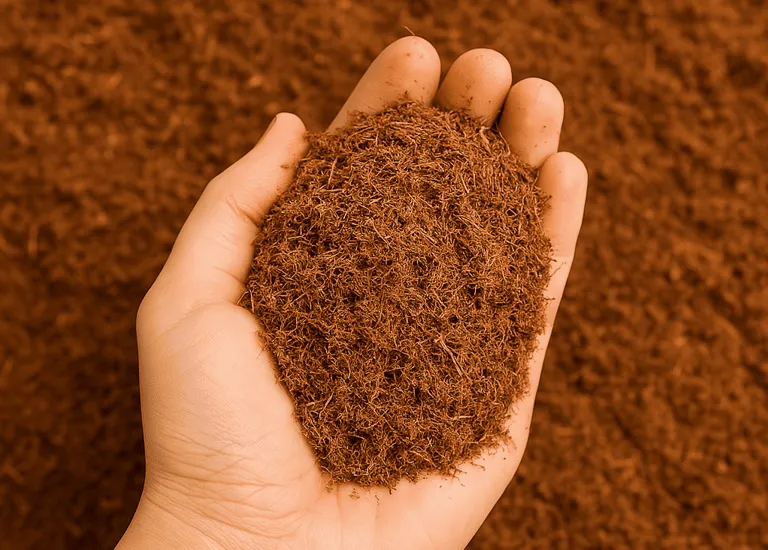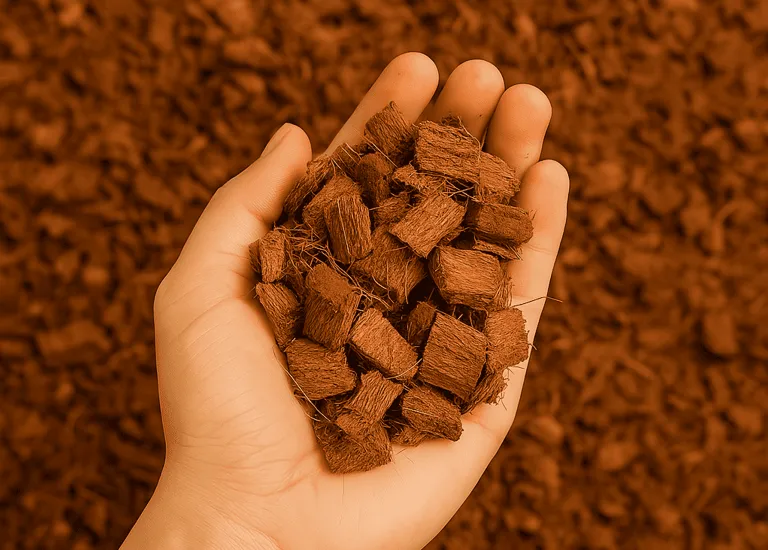
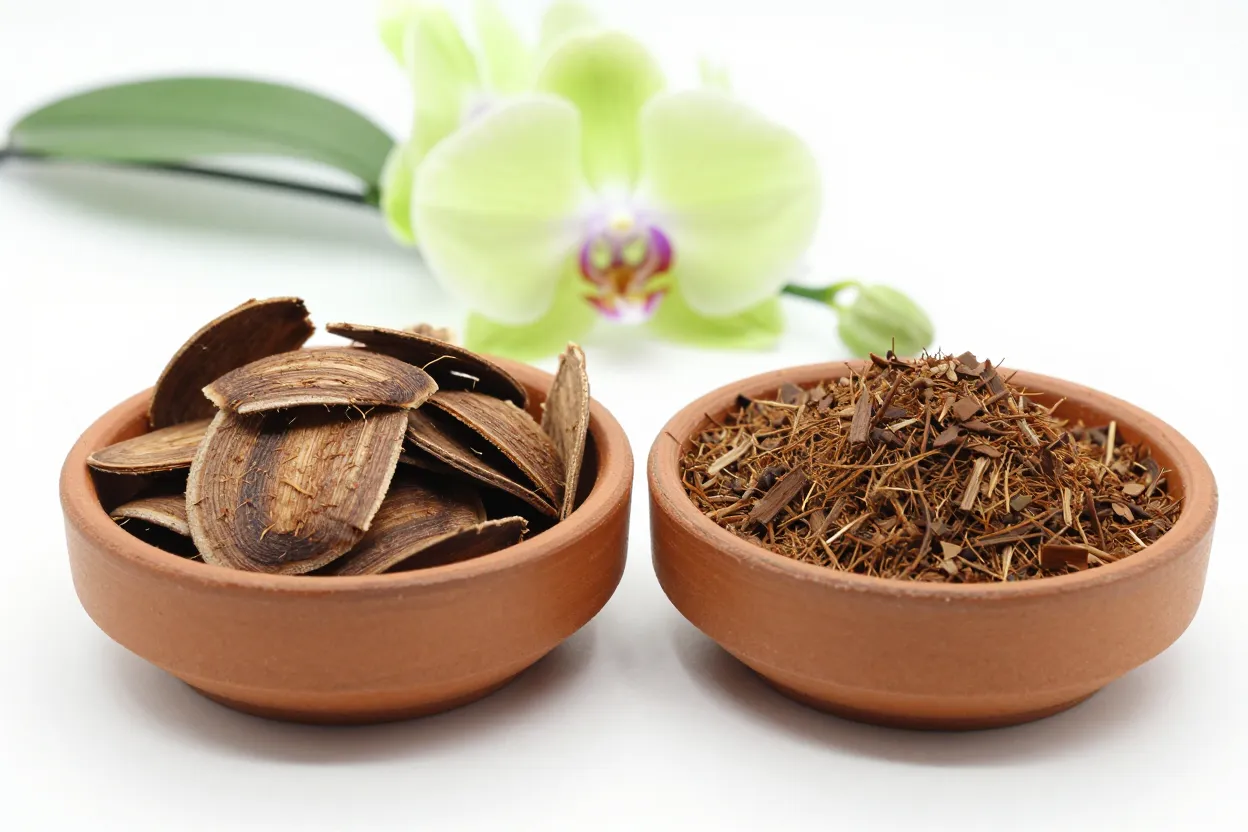
Both coconut husk chips and cocopeat come from the same source — the fibrous husk of the coconut. But they behave very differently as growing media. Understanding these differences helps you choose the right product for your plants, or the right blend of both.
What Are Coconut Husk Chips?
Coconut husk chips are small, irregular pieces of coconut husk, typically 6-18mm in size. They are created by cutting or shredding the husk into chunks. The chips retain the natural structure of the husk fibers, creating air pockets that provide excellent drainage and root aeration.
What Is Cocopeat?
Cocopeat (coir pith) is the fine, spongy material that remains after the long fibers are extracted from coconut husks. It has a soft, peat-like texture with high water retention — holding 8-9 times its weight in water.
Key Differences
Water Retention vs Drainage
Cocopeat excels at water retention. It keeps roots consistently moist, making it ideal for plants that need steady moisture — seedlings, leafy vegetables, herbs, and most tropical plants. The downside: it can stay too wet for drought-loving plants.
Husk chips provide superior drainage and air circulation. Water passes through quickly, and the air gaps prevent waterlogging. This makes chips ideal for orchids, bromeliads, anthuriums, and any plant that hates "wet feet."
Decomposition Rate
Cocopeat decomposes faster than husk chips. In a pot, cocopeat may compact and break down within 1-2 years, while husk chips can maintain their structure for 3-5 years. For long-term potted plants or permanent installations, chips offer better longevity.
Nutrient Behavior
Cocopeat has a higher cation exchange capacity (CEC), meaning it holds and slowly releases nutrients to roots. Husk chips have lower CEC — nutrients wash through more quickly, requiring more frequent fertilization but also reducing the risk of salt buildup.
Best Uses for Each
Use Cocopeat For:
- Seed germination and nursery beds
- Leafy vegetables (kangkung, lettuce, spinach)
- Herbs (basil, mint, coriander)
- General potting mixes
- Mushroom cultivation substrate
Use Husk Chips For:
- Orchids and epiphytic plants
- Anthuriums and bromeliads
- Drainage layer at the bottom of pots
- Mulching around trees and shrubs
- Hydroponic systems requiring fast drainage
Combine Both For:
- Custom potting mixes (e.g., 60% cocopeat + 40% chips for balanced moisture/drainage)
- Large container gardens
- Commercial greenhouse growing where different crops need different moisture levels
Supply from S&S Coco Trading
We supply both coconut husk (whole and cut) and cocopeat in various formats. Whether you need pure products or want to create custom blends, we can provide the right materials. Our products are sourced from mature Malaysian coconuts for optimal fiber quality. Contact us for samples, specifications, and pricing.