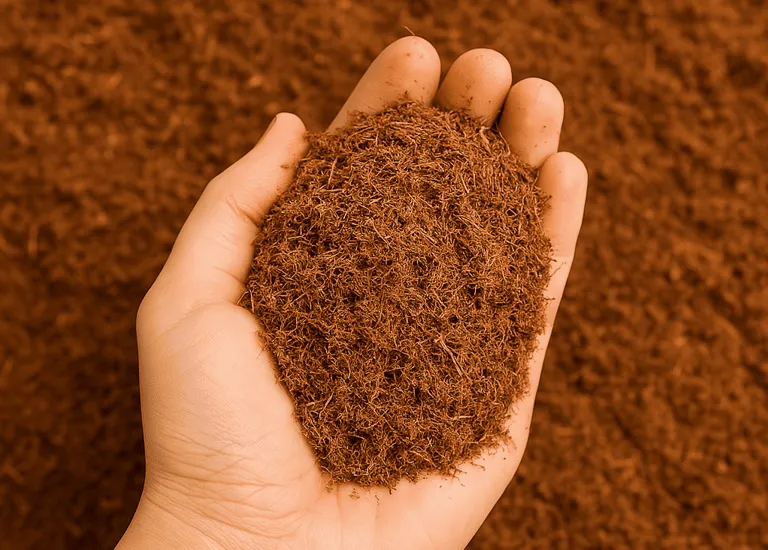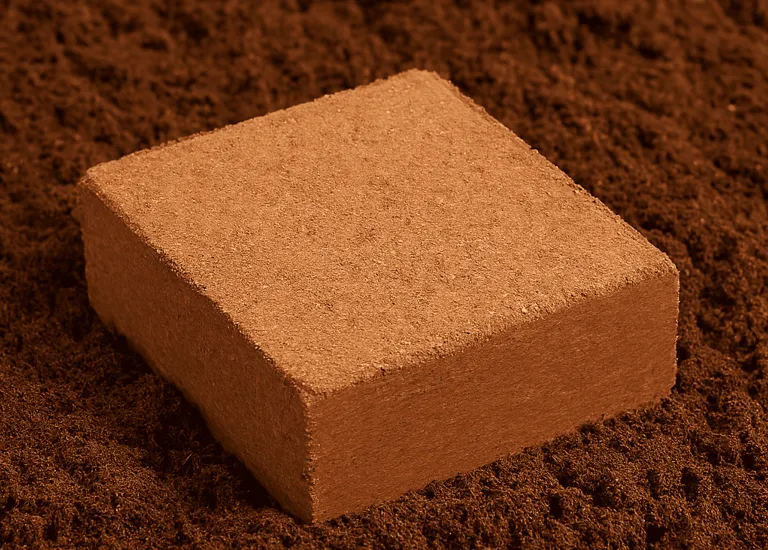
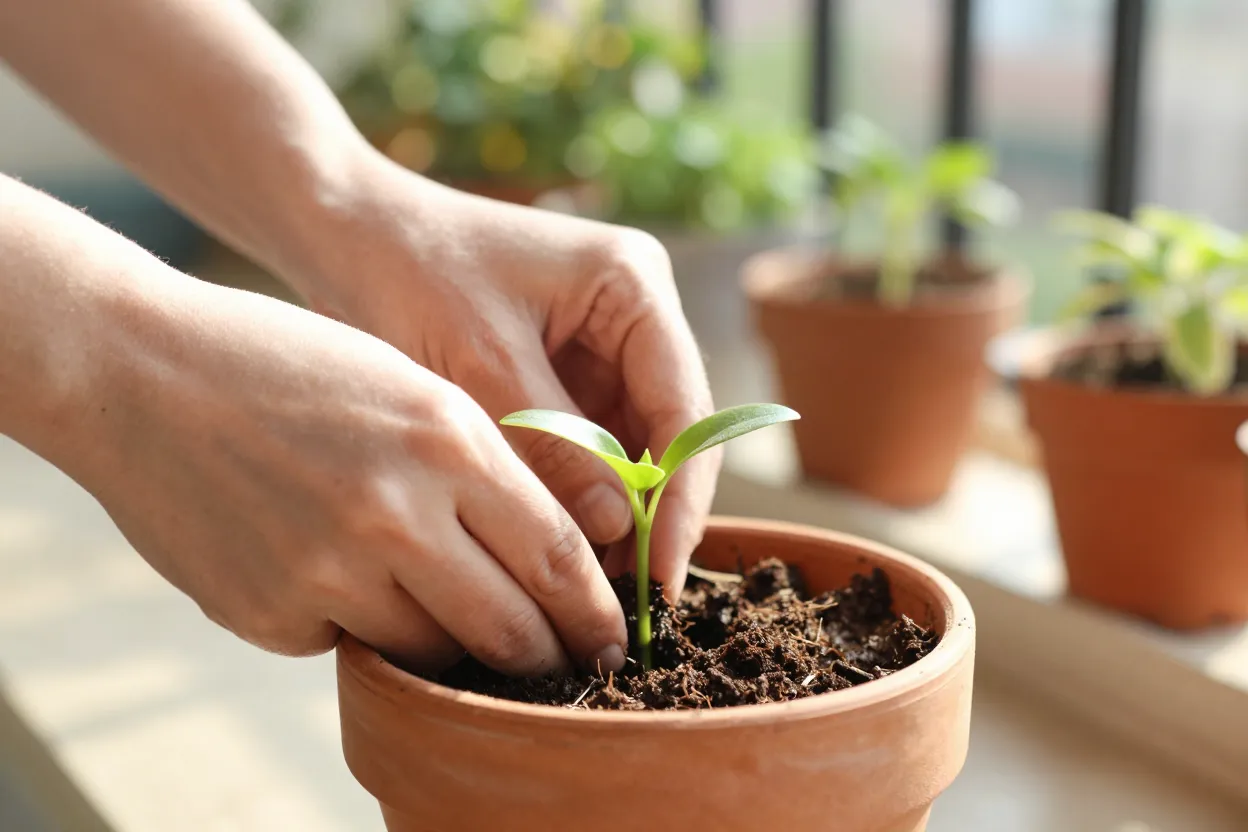
Cocopeat for chili (cili) fertigation has quietly become the default growing medium on commercial chili farms across Malaysia. Fertigation growers who once planted into open soil now run their cili in cocopeat-filled polybags because the substrate gives them clean, repeatable control over water and nutrients — the two levers that decide chili yield and fruit quality. This guide explains why cocopeat suits chili fertigation, how to choose the right grade, how to set up grow bags, and how to manage EC and pH through the crop.
Why Chili Fertigation Farms Choose Cocopeat
Chili is a long-season, disease-prone crop, and Malaysian soil and weather make consistent results difficult in open ground. Cocopeat removes most of those variables.
- Balanced water and air — Cocopeat holds plenty of moisture for a thirsty crop while keeping enough air-filled porosity that roots never suffocate, which is hard to achieve in heavy clay soils.
- Clean root zone — A fresh, washed medium starts free of soil-borne diseases, nematodes, and weed seeds — a major advantage for a crop as susceptible to bacterial wilt and root disease as chili.
- Precise feeding — Because cocopeat is inert, the plant gets exactly what your fertigation solution delivers, so you can fine-tune nutrition stage by stage.
- Uniform plants — Every polybag starts identical, so the block grows and ripens evenly and is easier to manage and harvest.
Choosing the Right Grade and Why Low EC Matters
Not all cocopeat suits chili. The wrong grade can stunt young transplants before the crop even establishes.
- Low, washed EC — Young chili seedlings are sensitive to salt. Raw, unwashed cocopeat can carry high sodium and potassium that scorch roots and slow establishment. A washed, low-EC medium lets your feed EC — not background salt — drive the plant.
- Buffered for calcium crops — Buffered (calcium-treated) cocopeat stops the medium from locking up the calcium and magnesium in your feed, helping prevent issues like blossom-end rot on the fruit.
- Medium particle size — A consistent, medium particle structure drains well in a polybag while still holding moisture between irrigations.
At S&S Coco Trading, every batch is tested for EC and pH where natural, so the medium you plant into behaves the same way every cycle.
Setting Up Grow Bags and Polybags
Good establishment starts with the right bag and the right volume.
- Volume per plant — Give each chili plant enough medium that the root zone does not swing from wet to bone-dry between irrigations; too little volume makes EC and moisture spike and crash.
- Drainage — Ensure bags drain freely. Chili roots hate standing water, and free drainage is what lets you run a healthy drain-to-waste flush.
- Hydrating blocks — If you buy compressed coco blocks, expand them with clean water, let them drain, and fill bags to a known starting moisture before transplanting.
- Spacing and support — Lay out bags to your row plan and stake or string plants early so the canopy stays open and airy, reducing disease pressure.
Fertigation, EC and pH Through the Crop
This is where cocopeat earns its keep. Most chili growers feed little and often, with a daily drain percentage to keep root-zone EC stable.
- Establishment — Start young transplants on a gentle feed EC so you do not shock new roots, keeping the medium evenly moist.
- Vegetative to flowering — Step EC up as the plant builds frame and sets flowers, matching the feed to demand rather than overfeeding.
- Fruiting — Hold a steady, slightly higher EC through fruiting and harvest to keep fruit sizing and quality consistent across multiple picks.
- pH targets — Keep root-zone pH roughly in the 5.5-6.5 band so nutrients stay available. Check both feed and drain — the drain tells you what the roots actually experience.
Common Mistakes to Avoid
- Using raw, high-EC cocopeat — Skipping washed/low-EC material to save a little money often costs far more in slow establishment and weak plants.
- Overwatering — Cocopeat already holds water well; too-frequent irrigation with no drain drowns roots and invites disease.
- Ignoring the drain — Feeding without checking drain EC and pH means problems show up as symptoms on the plant instead of numbers you can act on.
- Inconsistent medium — Switching grades or unbatched material mid-season changes how every bag waters, undoing your fertigation calibration.
Sourcing Cocopeat for Your Chili Farm
S&S Coco Trading has supplied Malaysian growers since 1994, processing fresh coconut husk at our factory in Padang Besar, Perlis. We supply washed and buffered cocopeat, loose fill, and compressed coco blocks in grow-bag and bulk formats for fertigation farms of any size. Pricing depends on grade, washed/buffered versus raw, block versus loose, order volume, packaging, and delivery distance, so the most accurate way to plan is a quick quote for your spec. Message us on WhatsApp with your crop, bag volume, and order size, and we will recommend the right grade and quote it with nationwide delivery for your cili program.