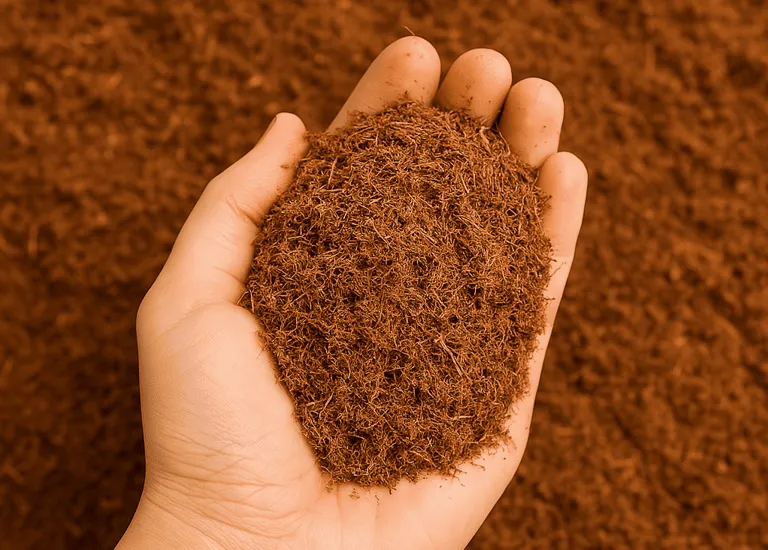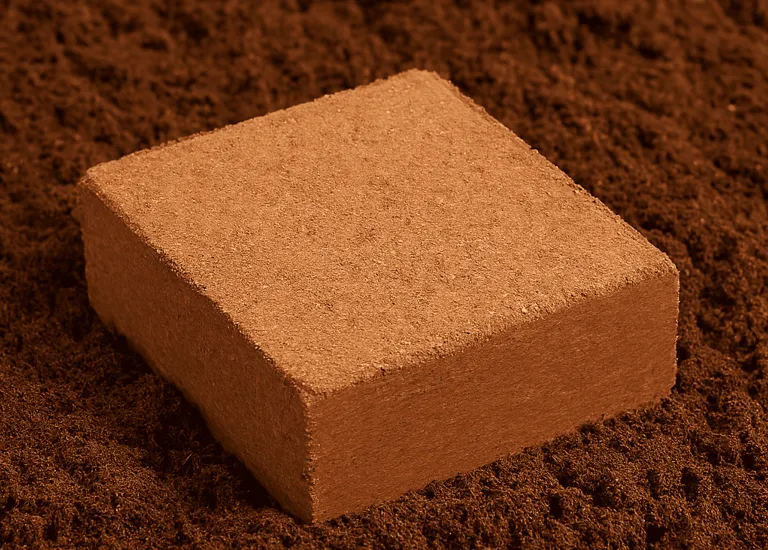
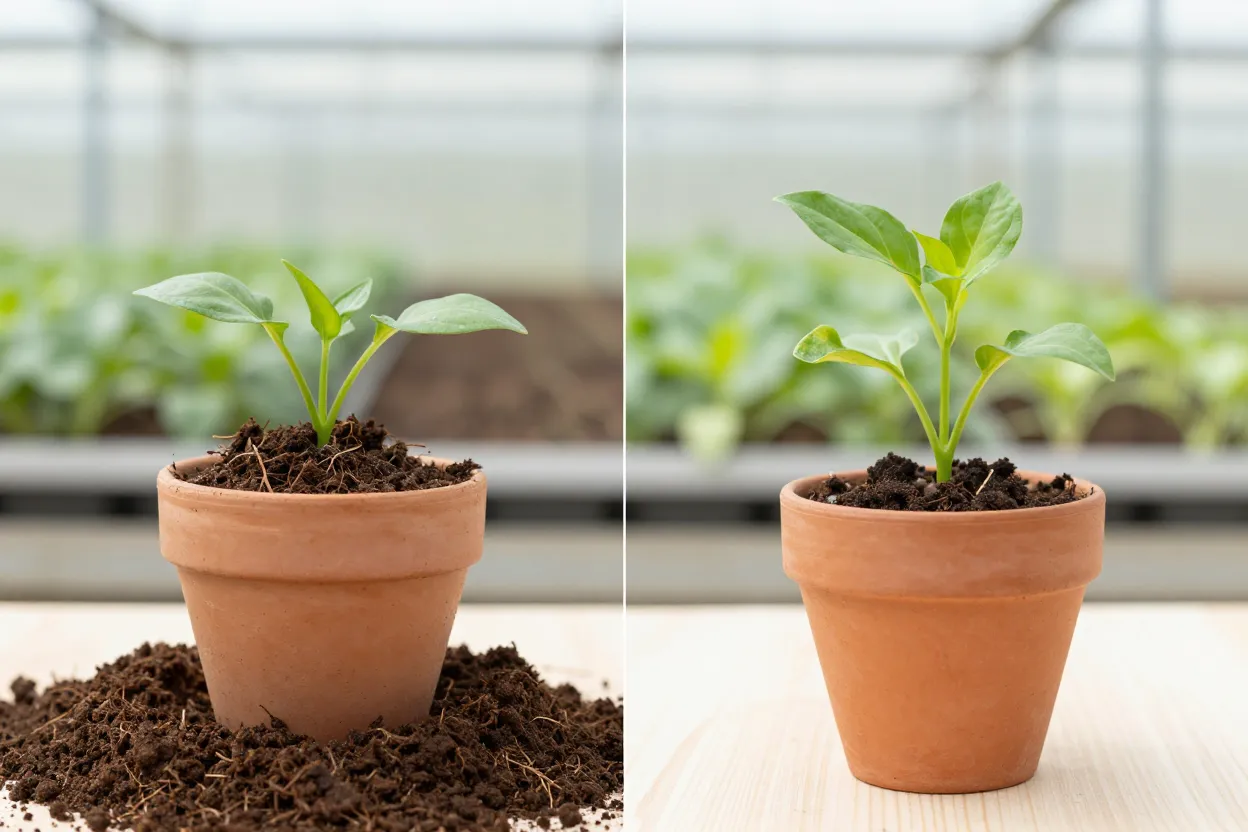
Cocopeat for rockmelon and honeydew fertigation has become the standard growing medium on commercial melon farms across Malaysia, and for good reason. When you are selling premium rockmelon and honeydew on quality and brix, you need tight control over the root zone — and cocopeat grow bags give you that control in a way open-field soil never can. This guide covers why fertigation growers choose cocopeat, how to prepare and set up grow bags, how to manage EC and pH through the crop, and what to look for when sourcing.
Why Rockmelon & Honeydew Farms Grow in Cocopeat
Melon is a high-value, quality-driven crop, and the difference between an average fruit and a premium one often comes down to root-zone management in the final weeks. Cocopeat lets you dial that in precisely.
- Precise root-zone control — Because cocopeat is an inert medium, you control exactly what the plant receives through the fertigation solution. Nothing is hidden in the soil profile.
- Brix and fruit quality — Controlling water and EC at the fruiting stage is how growers push sugar content (brix). That control is much harder in variable field soil.
- Cleaner than soil — A fresh, washed cocopeat medium starts free of soil-borne pathogens, nematodes, and weed seeds, reducing disease pressure on a susceptible crop.
- Consistency across the block — Every grow bag starts identical, so the whole house ripens more evenly — important when you are harvesting to a buyer's schedule.
Medium Preparation & Grow-Bag Setup
Good results start before a single seedling goes in. Raw cocopeat holds natural salts and sits high in potassium and sodium, so buffering and rinsing matter for a calcium-hungry crop like melon.
- Buffering — Buffered (calcium-treated) cocopeat displaces excess sodium and potassium from the medium so your feed calcium stays available to the plant. If you start with raw or block cocopeat, rinse and buffer before planting.
- Volume per plant — Melon is a vigorous, thirsty crop. Give each plant enough medium so the root zone does not swing dry between irrigations; growers typically run generous grow-bag volumes rather than tight pots to keep moisture and EC stable.
- Hydrating blocks — Compressed coco blocks are economical to ship and store; expand them with clean water before filling bags, and let them drain so you start from a known moisture point.
- Supporting the vine — Trellis and string each plant early. As fruit sizes up, support the developing melon with a net or sling so the vine is not damaged and the fruit hangs cleanly.
Fertigation & EC Management Through the Crop
This is where cocopeat earns its place. Most melon growers run drain-to-waste, feeding little and often and allowing a healthy drain percentage each day to flush salts and keep root-zone EC where they want it.
- Vegetative stage — Run a moderate feed EC to build a strong frame and leaf area without making the plant lazy. Keep the medium evenly moist but never waterlogged.
- Fruiting and ripening — As fruit sets and approaches maturity, growers raise feed EC and tighten irrigation to concentrate sugars and lift brix. This controlled stress is the lever for sweetness — and it is only safe when your medium and drain are predictable.
- pH targets — Aim to keep root-zone pH in the mildly acidic band that suits melon nutrient uptake (broadly around 5.5–6.5). Monitor both feed and drain, because the drain tells you what the root zone is actually doing.
- Drain-to-waste discipline — Check drain EC and pH daily. If drain EC climbs too far above feed, increase volume or drain percentage to flush; if it falls, the plant is feeding hard and you can lift input.
None of this works if your starting medium has an unknown or high background EC — you would be chasing a moving target. That is why the medium spec matters as much as the recipe.
Quality & Consistency: Why Batch Testing Matters
For fertigation, the medium is part of your nutrient program, so its properties have to be known and repeatable. The three things that matter most for melon:
- Low, stable EC — A low background EC means your feed EC is the EC the roots see. High or variable salt content forces constant flushing and makes the fruiting-stage EC push unpredictable.
- Stable pH — A medium that sits in the right range keeps your dosing simple and protects calcium and micronutrient availability during fruit fill.
- Uniform particle size — Consistent particle structure gives even water-holding and air-filled porosity across every bag, so irrigation behaves the same in the front and back of the house. Inconsistent fines cause some bags to stay wet and others to dry out.
This is why batch testing is not optional. At S&S Coco Trading, every batch is tested for EC and pH so you receive a medium with known properties — not a surprise that throws off a whole crop cycle.
Sourcing Cocopeat for Your Melon Farm
S&S Coco Trading has supplied Malaysian growers since 1994, processing fresh coconut husk at our factory in Padang Besar, Perlis. We supply washed and buffered cocopeat, loose fill, and compressed coco blocks in grow-bag and bulk formats to suit fertigation operations of any size. Pricing depends on the practical factors — grade, washed/buffered versus raw, block versus loose, order volume, packaging, delivery distance, and export documentation — so the most accurate way to plan is to request a current quote for your spec.
Whether you run a single fertigation house or supply melon to packers and exporters, talk to S&S Coco Trading for a consistent, batch-tested medium with nationwide delivery and export support. Message us on WhatsApp with your crop, bag volume, and order size, and we will quote the right grade for your rockmelon and honeydew program.