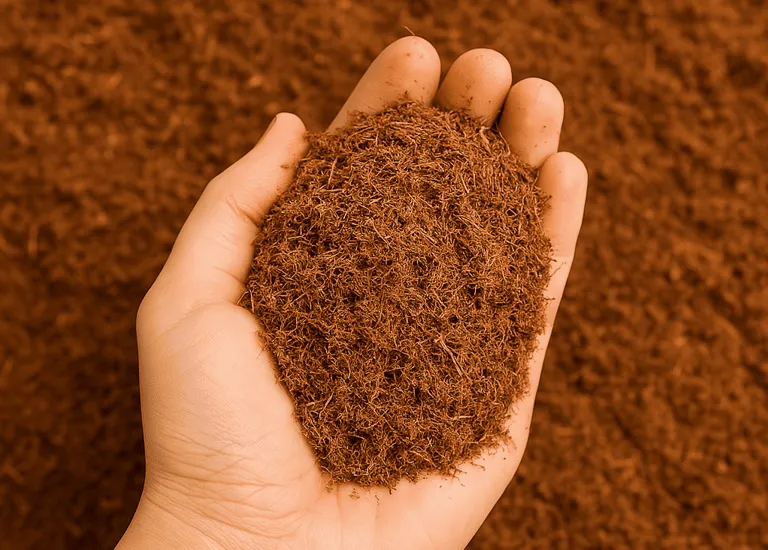
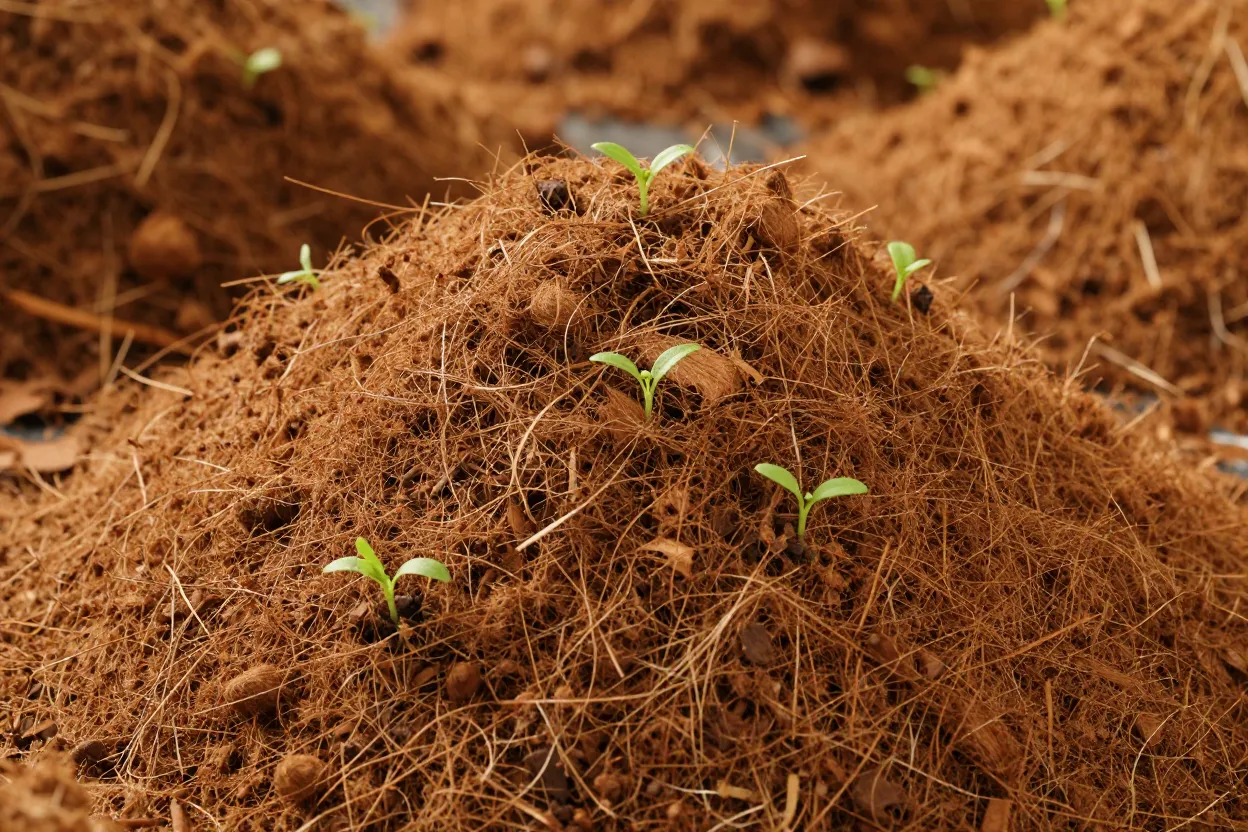
Hydroponic farming is booming in Malaysia. Urban farms, commercial greenhouses, and even backyard growers are adopting soilless growing methods to produce cleaner, faster-growing crops. And increasingly, cocopeat (coir pith) is replacing traditional hydroponic substrates like rockwool and perlite as the medium of choice.
Why Cocopeat for Hydroponics?
Cocopeat offers several advantages over synthetic hydroponic substrates:
- Natural and biodegradable — Unlike rockwool (which never decomposes), spent cocopeat can be composted or used as soil amendment.
- Excellent water-to-air ratio — Cocopeat holds water while maintaining 20-30% air porosity, providing roots with both moisture and oxygen.
- pH buffering — With a natural pH of 5.5-6.5, cocopeat is already in the ideal hydroponic range, requiring minimal adjustment.
- Renewable and affordable — Cocopeat costs significantly less than rockwool slabs and is locally produced in Malaysia.
- Reusable — Quality cocopeat can be reused for 2-3 growing cycles with proper treatment between crops.
Setting Up Cocopeat Hydroponics
Step 1: Choose the Right Format
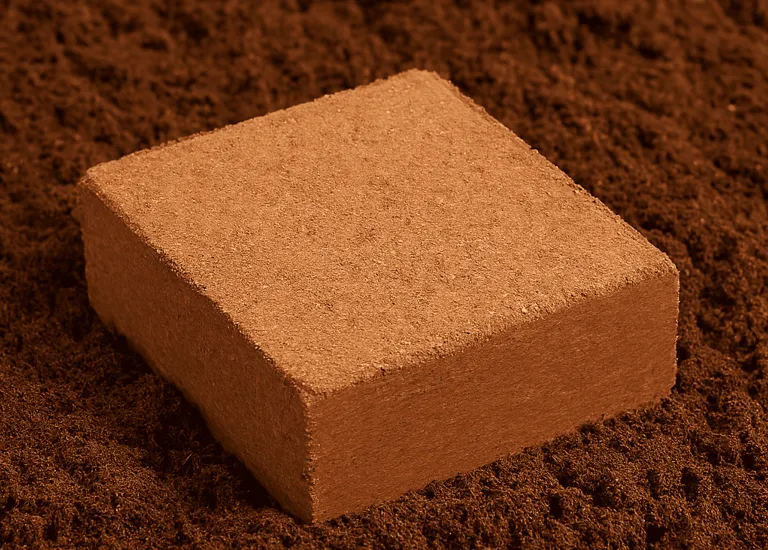
For hydroponics, use low-EC cocopeat (below 0.5 mS/cm). High salt content will interfere with your nutrient solution. Compressed coco blocks are convenient — hydrate a 5kg block to get 60-75 liters of ready-to-use substrate. Alternatively, pre-made coco grow bags are available for drip irrigation systems.
Step 2: Prepare and Buffer
Before first use, soak cocopeat in a calcium-magnesium (Cal-Mag) solution for 8-12 hours. This buffers the natural cation exchange sites and prevents the cocopeat from locking up calcium and magnesium from your nutrient solution. Rinse thoroughly after buffering.
Step 3: Set Up Your System
Cocopeat works with most hydroponic systems:
- Drip irrigation — The most popular method. Cocopeat in grow bags or pots, with drip emitters delivering nutrient solution 4-8 times per day.
- Flood and drain — Cocopeat in net pots or trays, periodically flooded with nutrient solution.
- Dutch bucket — Individual buckets filled with cocopeat, connected to a central reservoir. Ideal for large fruiting crops.
Step 4: Manage Nutrients
Cocopeat has a natural tendency to hold potassium and release calcium. Adjust your nutrient solution accordingly — use a coco-specific nutrient formula or add extra Cal-Mag to standard hydroponic nutrients. Monitor EC (1.2-2.0 mS/cm for most crops) and pH (5.5-6.2) of your runoff daily.
Best Crops for Coco Hydroponics in Malaysia
- Leafy greens: Lettuce, kangkung, pak choy — harvest in 25-35 days
- Herbs: Basil, mint, coriander — high value per square meter
- Fruiting crops: Tomato, chili, cucumber — need Dutch bucket or grow bag systems
- Strawberries: Growing demand in Malaysia, excellent in coco substrate
Cocopeat vs Rockwool for Hydroponics
Rockwool gives slightly more precise moisture control, but cocopeat wins on sustainability, cost, and ease of disposal. For commercial operations in Malaysia, cocopeat is typically 40-60% cheaper than rockwool while delivering comparable yields.
Source Quality Cocopeat for Hydroponics
For hydroponic use, insist on washed, low-EC cocopeat with consistent particle size. S&S Coco Trading supplies hydroponic-grade cocopeat in both compressed blocks and loose form, with EC levels consistently below 0.5 mS/cm. Contact us for samples and bulk pricing.