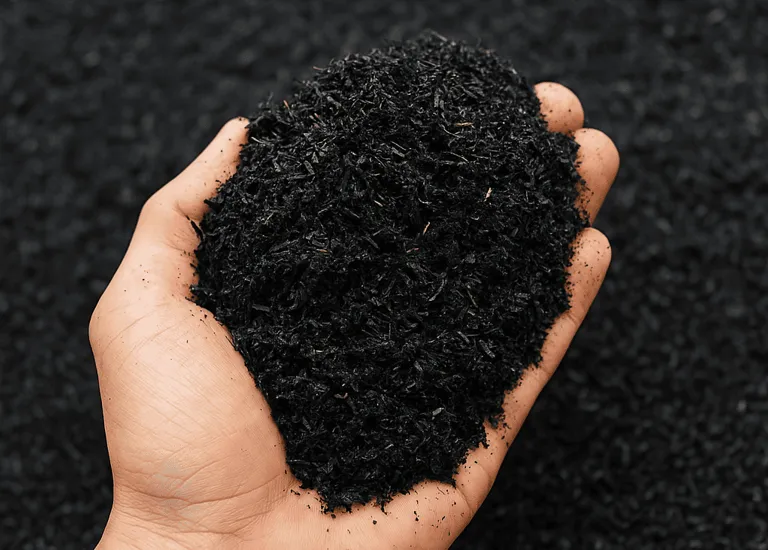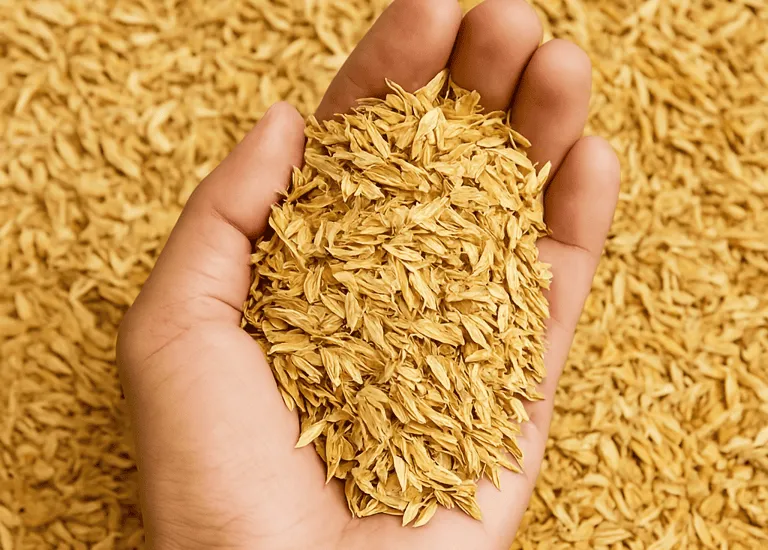
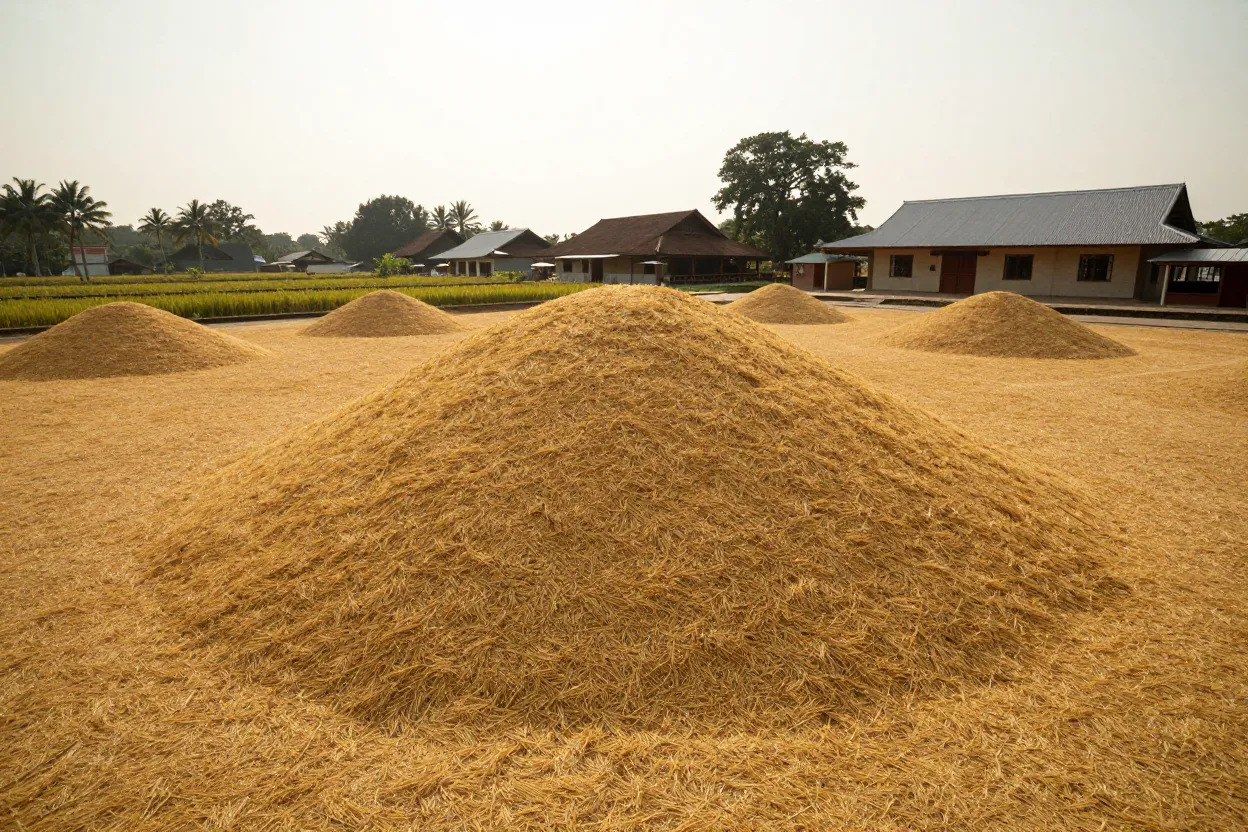
Rice husk — the protective outer layer of rice grains removed during milling — was once treated as agricultural waste. Today, it's recognized as a valuable biomass fuel source. Malaysia's rice mills produce hundreds of thousands of tonnes of rice husk annually, and industries are finding profitable ways to put it to use.
Why Rice Husk as Fuel?
Rice husk has a calorific value of 13-15 MJ/kg — lower than palm kernel shell or coal, but with significant advantages:
- Extremely cheap — As a by-product of rice milling, rice husk is one of the most affordable biomass fuels available.
- Abundant in Malaysia — The country's rice-growing states (Kedah, Perlis, Kelantan, Perak) produce rice husk year-round.
- Carbon neutral — Burning rice husk releases only the CO2 that the rice plant absorbed while growing.
- Dual output — After burning, the remaining ash (rice husk ash) is itself a valuable product used in cement and agriculture.
Industrial Applications
Brick Kilns and Ceramics
Rice husk is widely used as kiln fuel for brick making, especially in rural Malaysia. It burns at a steady temperature suitable for firing clay products. Many small-scale brick manufacturers in Kedah and Perlis rely on locally sourced rice husk as their primary fuel.
Poultry and Livestock Farms
Rice husk serves a dual purpose on farms: as animal bedding material and as fuel for heating systems. Poultry farms use rice husk bedding because it absorbs moisture effectively and is cheap to replace. The used bedding can then be burned for energy or composted as fertilizer.
Rice Mill Boilers
Many rice mills burn their own rice husk to generate steam for the drying and parboiling process. This creates a closed loop where the waste product fuels the operation, significantly reducing energy costs.
Small-Scale Power Generation
Rice husk gasification technology converts rice husk into syngas, which can power generators. Several pilot projects in Southeast Asia have demonstrated that a 100 kW gasifier can process about 100 kg of rice husk per hour, providing affordable electricity for rural communities.
Handling and Storage
Rice husk is lightweight with a bulk density of only 100-120 kg/m³, which means it requires more storage space per unit of energy compared to denser fuels. Key considerations:
- Store in covered, dry areas to prevent moisture absorption
- Avoid compaction during storage — loose husk burns more efficiently
- Be aware of dust and fire risks in enclosed storage areas
- Transport in bulk trucks or large bags for cost efficiency
Rice Husk vs Other Biomass Fuels
For higher-energy applications like industrial boilers and power plants, palm kernel shell (16-18 MJ/kg) offers more energy per kilogram. However, rice husk is typically 30-50% cheaper. The choice depends on whether energy density or fuel cost is more important for your operation.
Supply from S&S Coco Trading
We supply bulk rice husk sourced from rice mills in Perlis and northern Malaysia. Whether you need rice husk for fuel, bedding, or processing into rice husk ash, we can accommodate orders of all sizes with reliable delivery. Contact us for current pricing and availability.