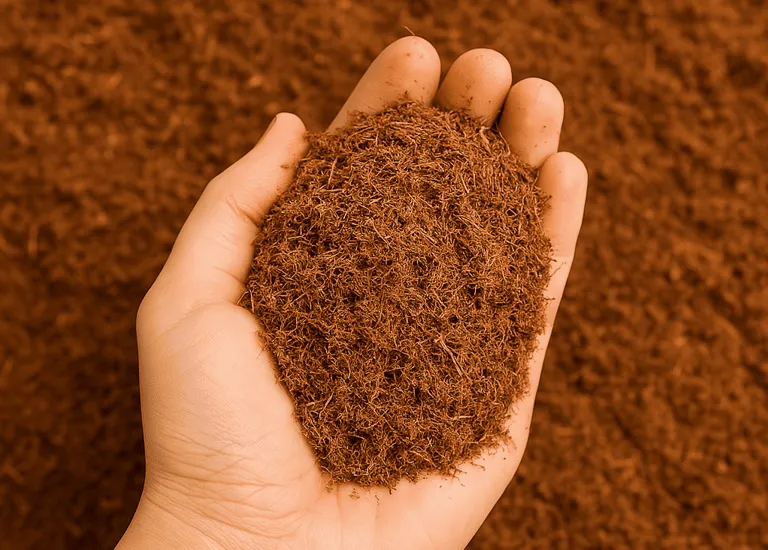
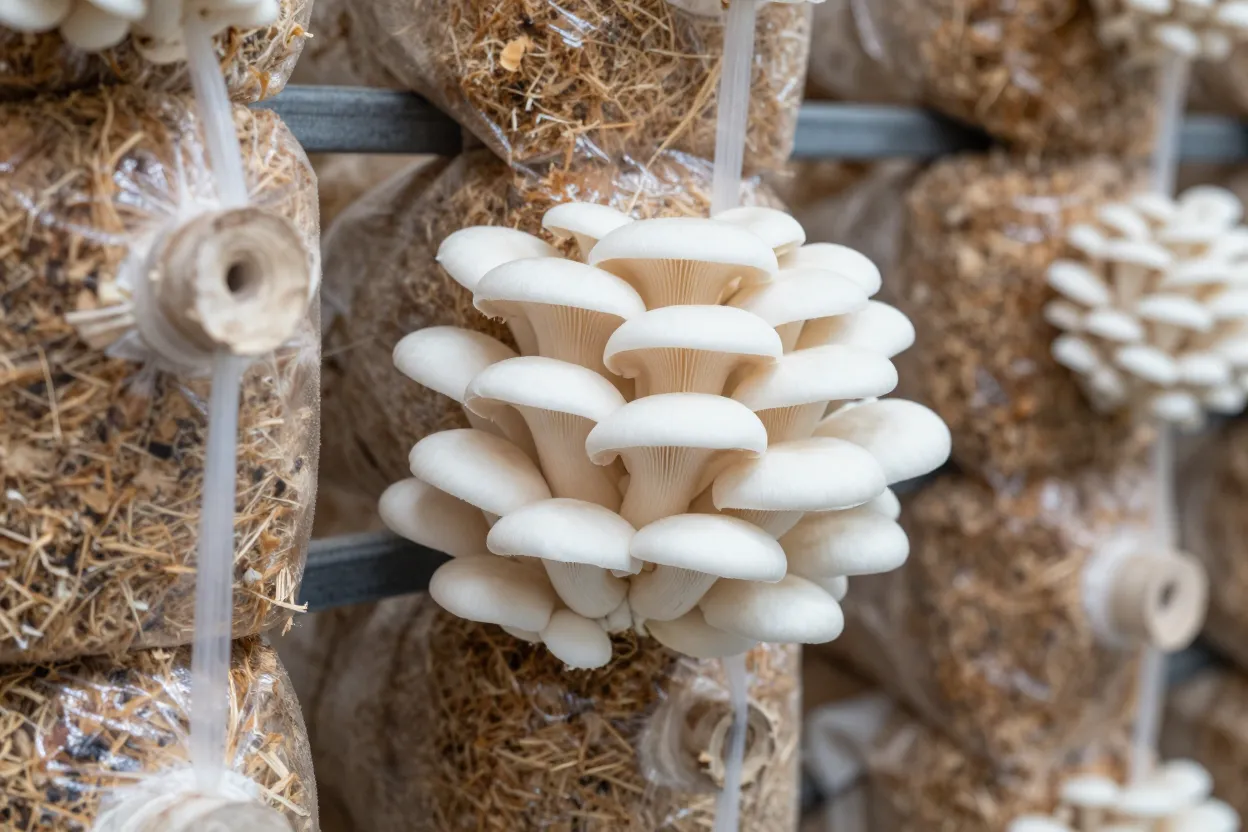
Mushroom farming is one of the fastest-growing agricultural sectors in Malaysia. Oyster mushrooms, shiitake, and king oyster varieties are in high demand from restaurants, supermarkets, and health-conscious consumers. And an increasing number of Malaysian mushroom growers are discovering that cocopeat makes an excellent substrate — often outperforming traditional sawdust.
Why Cocopeat Works for Mushrooms
Mushrooms need a substrate that holds moisture, allows air circulation, and provides the right conditions for mycelium growth. Cocopeat checks all these boxes:
- Superior moisture retention — Cocopeat holds 8-9 times its weight in water, keeping the substrate consistently moist without waterlogging. This is critical in Malaysia's hot climate where substrates can dry out quickly.
- Excellent aeration — The spongy texture allows oxygen to reach the mycelium, promoting faster colonization and reducing anaerobic conditions that cause contamination.
- Naturally antifungal — Ironically, while cocopeat supports mushroom mycelium growth, it naturally resists competitive molds like Trichoderma (green mold) — the #1 enemy of mushroom growers.
- Consistent pH — With a pH of 5.5-6.5, cocopeat is in the ideal range for most edible mushroom species without needing lime adjustment.
- Sustainable and available — Unlike sawdust which contributes to deforestation, cocopeat is a renewable coconut by-product.
How to Use Cocopeat as Mushroom Substrate
Step 1: Prepare the Substrate
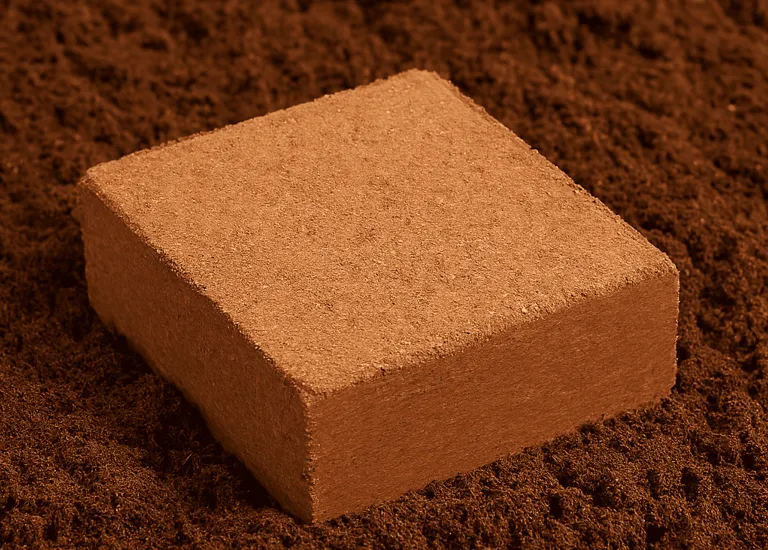
If using compressed coco blocks, hydrate them first by soaking in hot water (60-70°C) for 1-2 hours. Hot water serves double duty: it hydrates the cocopeat and pasteurizes it, killing competing organisms. Drain excess water until the substrate reaches 65-70% moisture content — when squeezed, it should release only a few drops of water.
Step 2: Mix with Supplements
For best results, mix cocopeat with supplemental nutrients:
- Oyster mushrooms: 80% cocopeat + 15% rice bran + 5% calcium carbonate
- Shiitake: 70% cocopeat + 20% rice bran + 5% wheat bran + 5% gypsum
- King oyster: 75% cocopeat + 20% soy hull + 5% calcium carbonate
Step 3: Fill Bags and Inoculate
Pack the substrate into polypropylene bags (typically 1-2 kg per bag). Sterilize or pasteurize the bags, then inoculate with mushroom spawn. Most growers in Malaysia use grain spawn for faster colonization.
Step 4: Incubation and Fruiting
Place inoculated bags in a dark room at 24-28°C for colonization (typically 2-4 weeks). Once fully colonized, move to a fruiting room with indirect light, high humidity (85-95%), and fresh air exchange. Cocopeat substrates typically produce the first flush within 5-7 days of opening.
Yield Comparison
Malaysian growers report that cocopeat substrates produce comparable or slightly higher yields than sawdust for oyster mushrooms. The main advantage is consistency — cocopeat substrate contamination rates are typically 5-10% lower than sawdust, meaning more bags produce mushrooms and fewer are lost to mold.
Where to Buy Cocopeat for Mushroom Growing
S&S Coco Trading supplies cocopeat in both compressed blocks and loose form, ideal for mushroom substrate preparation. Our low-EC, pasteurization-ready cocopeat is used by mushroom farms across Peninsular Malaysia. Contact us for bulk pricing and delivery.