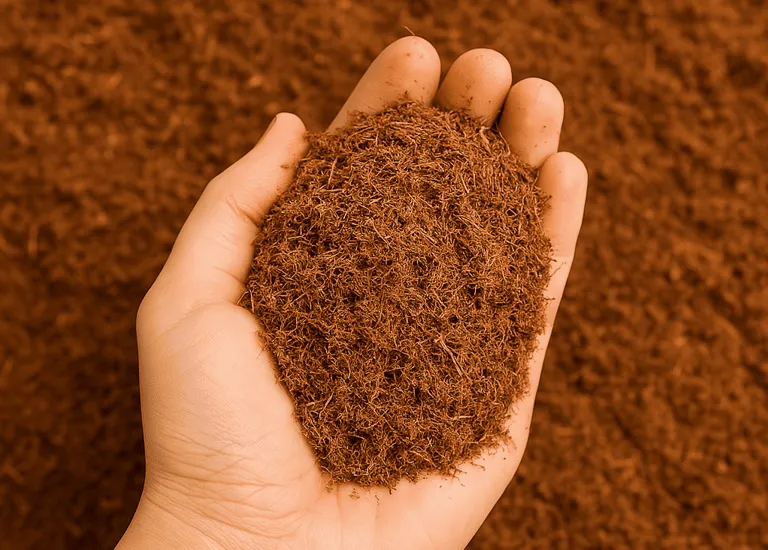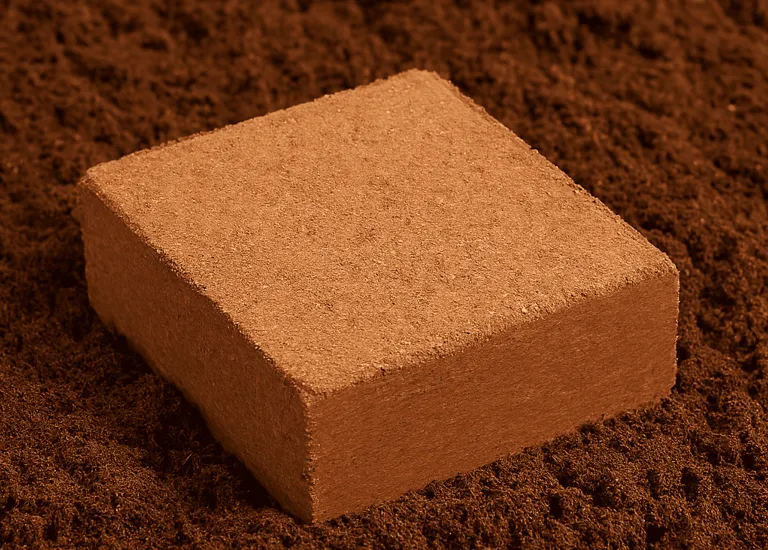
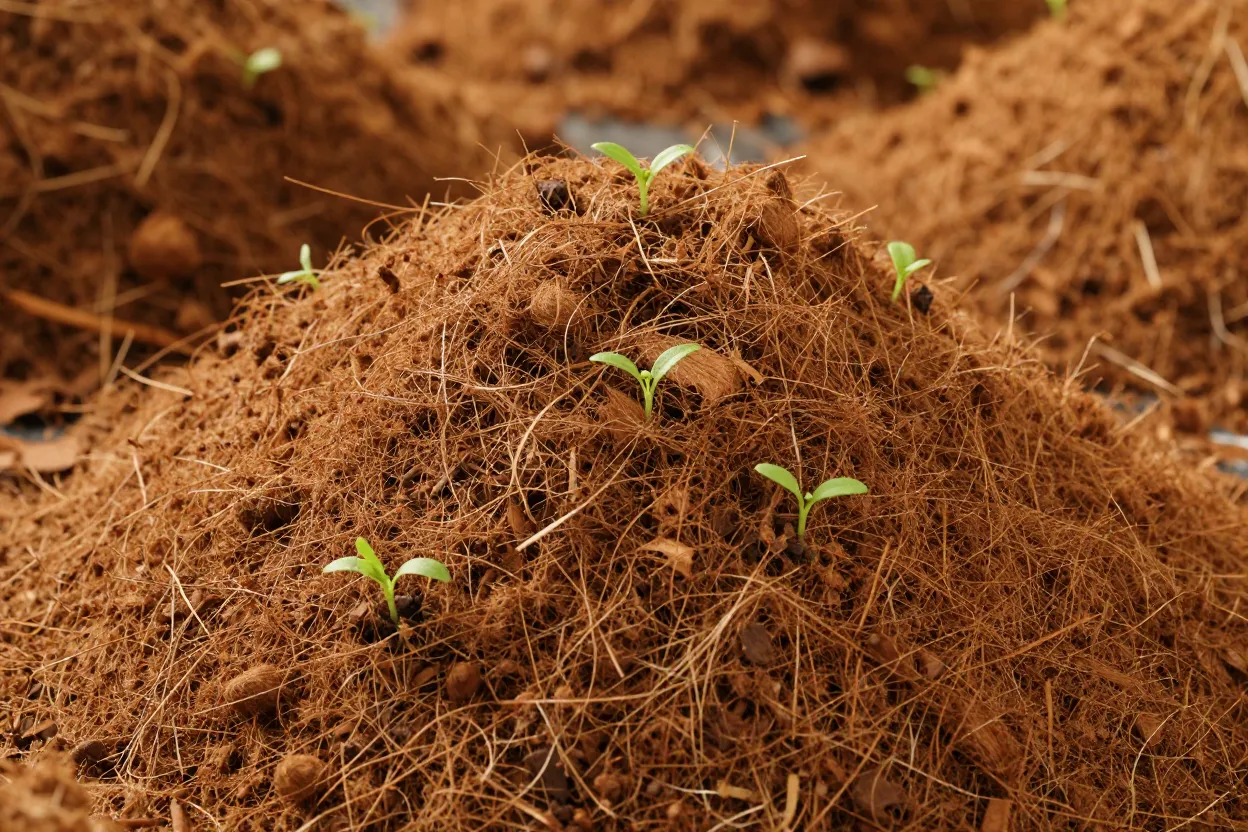
Cocopeat, also known as coir pith or coco peat, is a natural by-product of coconut husk processing. When coconut husks are processed to extract coir fiber, the remaining spongy material is cocopeat. It has become one of the most popular growing mediums for agriculture, horticulture, and gardening across Malaysia and worldwide.
How Is Cocopeat Made?
The production process starts with collecting coconut husks from coconut processing facilities. The husks are soaked, then mechanically processed to separate the long coir fibers from the pith. The pith is then washed, dried, and compressed into blocks or sold as loose material. At S&S Coco Trading, our Perlis factory processes fresh coconut husks daily to ensure consistent quality.
Benefits of Cocopeat
- Excellent water retention — Cocopeat can hold up to 8-9 times its weight in water, reducing the need for frequent watering.
- Good aeration — Its spongy structure allows air to reach plant roots, preventing root rot.
- pH neutral — With a pH of 5.5-6.5, cocopeat suits most plants without adjustment.
- Eco-friendly — It's a renewable by-product that would otherwise go to waste.
- Pest resistant — Naturally resistant to fungal growth and pests.
Common Uses in Malaysia
Malaysian farms and nurseries use cocopeat for seed germination, potting mixes, hydroponic growing, and mushroom cultivation. It's also widely used in landscaping projects and as soil amendment for improving drainage in clay-heavy Malaysian soils.
How to Choose Quality Cocopeat
Look for cocopeat that has been properly washed to remove excess salts, has consistent texture, and comes from a reliable supplier. At S&S Coco Trading, we test every batch for EC (electrical conductivity) and pH levels to ensure our cocopeat meets agricultural standards.